
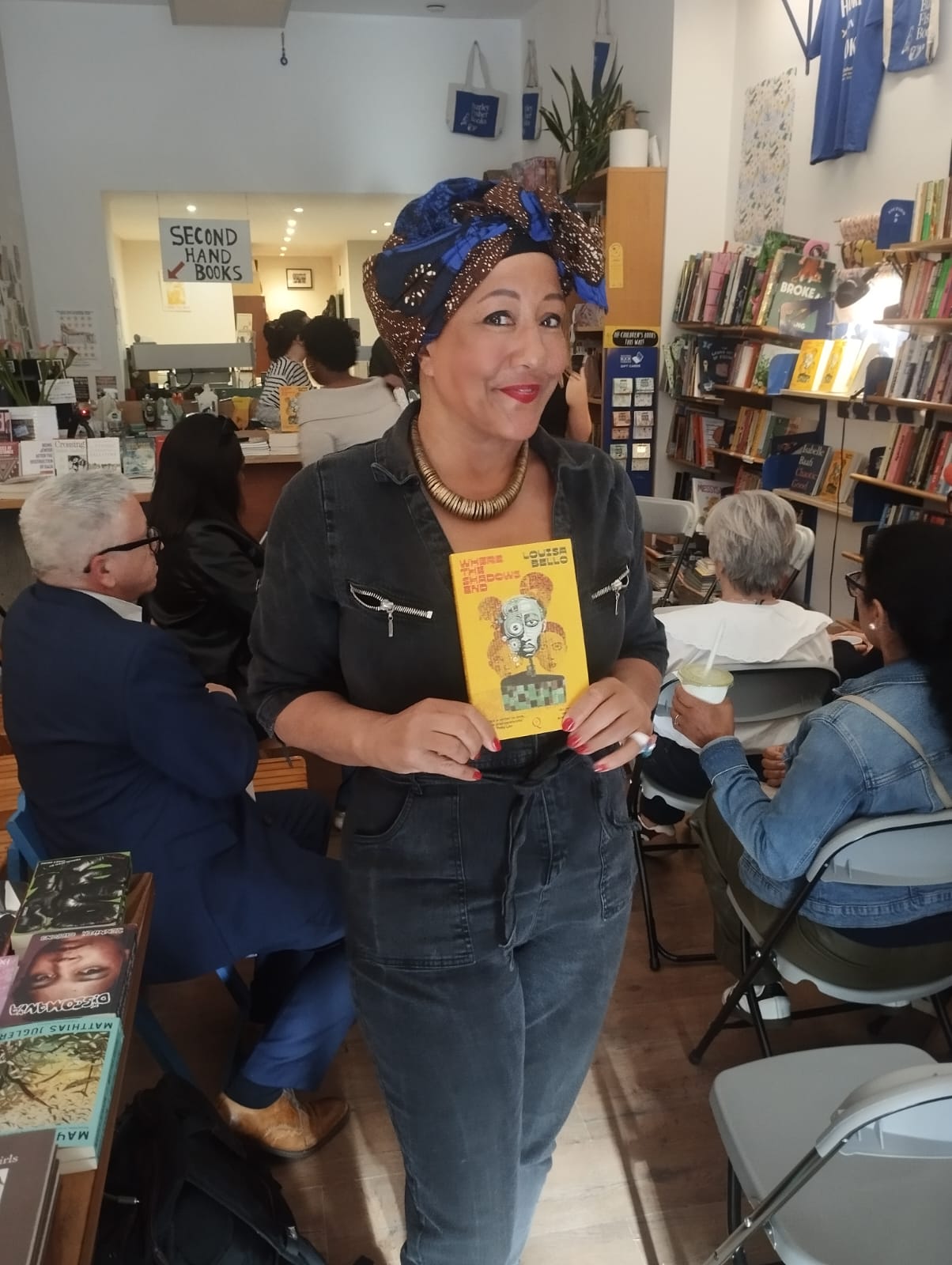
Louisa Bello’s debut novel Where the Shadows End is a thought-provoking and moving exploration of memory, identity, guilt and belonging. A British Nigerian writer, teacher and humanitarian, Bello draws on her South London upbringing to tell the story of Sam; a man forced to confront the voices that have shaped his life. Originally conceived as a short story during her Creative Writing degree, the novel went on to be long listed for the Pat Kavanagh Prize and supported by an Arts Council Time to Write grant. Bello caught up with THE REAL to discuss her journey as a writer, the inspiration of the novel and what comes next.
When did you first realise you wanted to become a writer?
I have thought about this often. In primary school, I became a ‘free reader’ in year 1, way before any of my friends or classmates. This meant I spent reading time in the library, on my own, choosing my own books to sit and read. Sometimes the teacher would forget me down there, and I’d spend the whole afternoon curled up on a bean bag in the quiet, having adventures in far-off lands. I remember finishing The Hobbit there. I also lived in my local library, West Hill Library, during weekends and holidays. But, actually, I realised that it could be a career when Mr. Murphy, my first-year English teacher at Christ’s School, told my mum at parents’ evening that I could be a writer. I’d never known it could become a job or even a job I could do until I was told that. From that moment, writing became a thing for me. I wrote anything that anyone needed writing – birthday cards, CVs, personal statements. I chose Media Studies at college and Journalism for my first BA(Hons) but then after a stint working for Media Week as an editorial assistant, I realised I didn’t want to be Kate Adie anymore, I wanted to be Judy Blume.I had no black or brown authors that I remember growing up. No black or brown characters. I mean, there obviously were, but nobody showed me these books, and I certainly don’t recall them in the library. The writing world was white, so it never occurred to me that I had a place within it; it obviously took a white teacher to invite me in, but once he did, I never left.
Who were some of the authors that inspired you growing up?
I read so much crap as a kid! I mean, it was great at the time. Judy Blume taught me how to increase my bust, and the Choose Your Own Adventure series, where you could make a choice at the end of each chapter and follow a different plotline every time. At home, we had a set of encyclopedias that taught me about the world through the Western lens, and I remember devouring Roald Dahl’s books, and the Flowers In The Attic and Sweet Valley High series’ (I read the first one again recently and was horrified by how being ‘white/blonde/blue-eyed meant beauty and tried to recall what my teenage self might have thought about that, but I couldn’t) but then, when I got to secondary school, I found Maya Angelou and – oh wow…my eyes were opened! She led me to Toni Morrison, Hanif Kureishi, Ben Okri, Chinua Echebe… mind blown. I remember hunting out books by black and brown authors in college, and finding James Baldwin alongside The Communist Manifesto…it was actually music that inspired me growing up, Nina Simone, Louis Armstrong, Patsy Clyde and Eartha Kitt (my nan loved them and had tapes we’d play when I stayed at her house) the Kinks, Pink Floyd, Duran Duran, Bob Marley, Jimmy Cliff, my dad’s funk and soul album and then CD collections with all the words inside…
You’ve described yourself as a humanitarian, teacher and writer. Which of these identities has had the greater influence on your creative voice?
They all do. My identity is a creation of everything I have experienced and lived through and everything important to me; therefore, you will always find aspects of me within my lessons and questions that stem from my experiences in my writing. I teach kindness and empathy in every lesson I give, and every action I take will be founded on empathy because that is who I am. Even Sam’s mum and his nemesis P, I tried to make sure the reader understands why they do what they do…and of course, there’s Bird Boy…
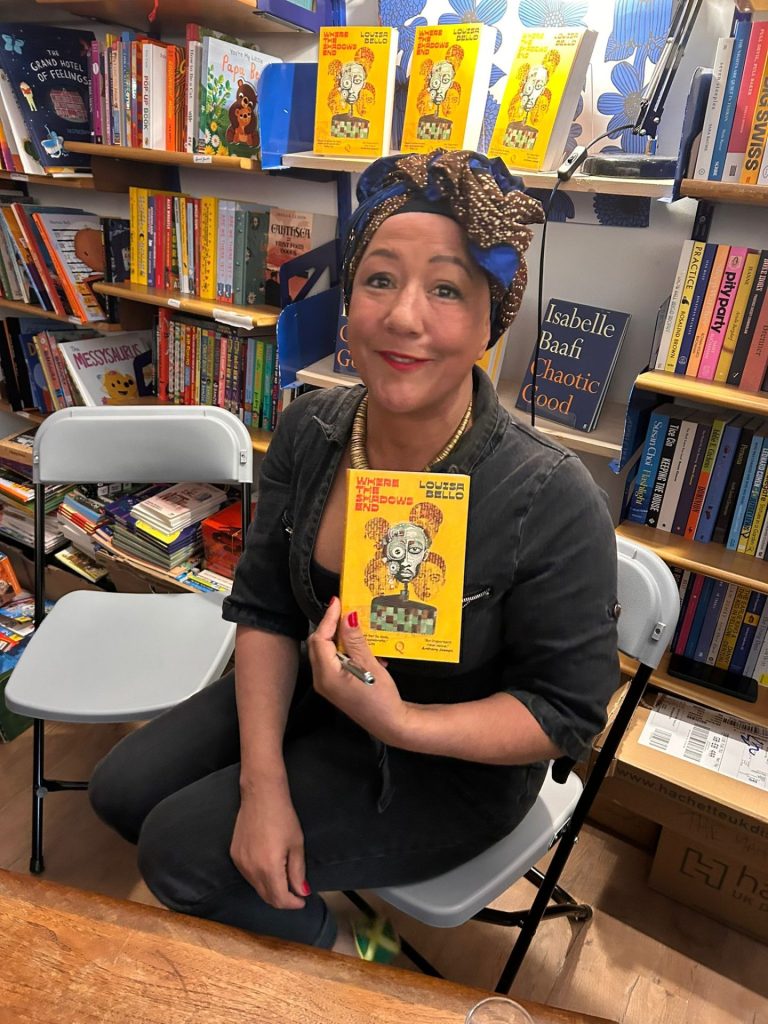
You’re raised in South London, have Nigerian heritage and now live in Brighton. How have questions of identity, belonging and home shaped both your life and your fiction?
I’m British Nigerian. My dad is Nigerian; we are Yoruba, and I’m very proud of this, but as we grew up in London, I only got to enjoy bits of the culture – food, music, religion etc. I’ve always been really annoyed with myself for not learning Yoruba when I was younger. When I found out about the Orisha, I realised there was so much about Nigerian history and culture I do not know about because I’m London-born, just like Sam, yet it is very much part of my identity. I’m also a Londoner, born and bred. Wandsworth girl, but I’ve lived all around the world- Ecuador, China, Australia, Holland, Italy- but London is my home. It is also the cause and effect of endless trauma for many, including me, and especially working-class folk, even more especially black and brown working-class folk. And so, this is where Sam had to be born. Trauma grows in dark, cold places as well as warm, comfortable places. And sometimes that can also be Home for many and manifest into inter-generational trauma bonding. I’ve seen it over and over, and it causes all sorts of negative or detrimental behaviour in adults. Not knowing where you come from can also be traumatic, and that’s something I’ve also witnessed in friends who are adopted or who don’t know their biological dads. I’ve seen the self-doubt that living with the unknown can cause adopted white friends, and I thought, imagine being brown and not knowing where you are from; how might it affect a person?
But, wherever I’ve lived, I’ve often found community without realising I even had it. Those people we see every day when you live in an area for an extended period of time – these people all have a perception of you, might even know you better than you know yourself, because of that unique, narrow perception. They might know things about you that you don’t even know about yourself. Like the bus driver who asked about my dog despite me never having her with me when I got on the bus to work in the mornings. When I asked him how he knew, he said I seemed like a dog lover because I was kind to everyone (I secretly thought it might have been the dog hairs on my clothes!). It got me to thinking about isolation and loneliness, and what would happen if more people realised they have more friends and community than they think – might they reach out? Feel more supported? Community changes society for the better. Fact.
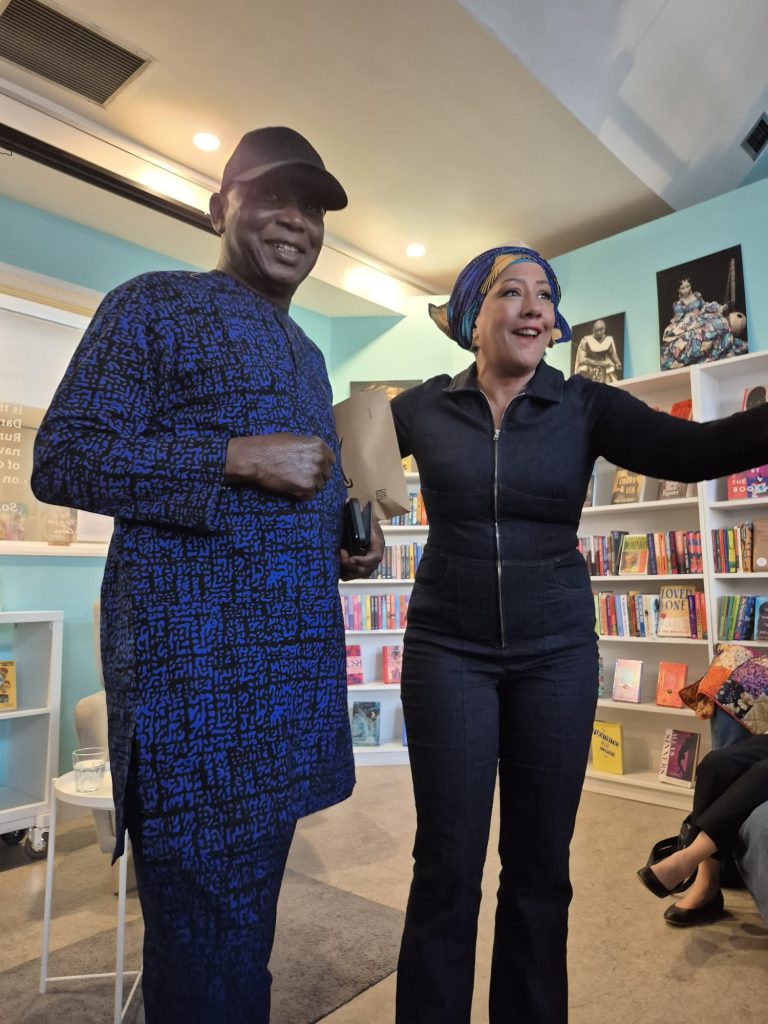
Where the Shadows End began life as London Planes and was longlisted for the Pat Kavanagh Prize before receiving support from an Arts Council grant. How did the novel evolve over that journey?
In 2016, I completed a BA(Hons) in Creative Writing at Birkbeck, University of London. During the degree, I had an inspirational short story professor, Jonathan Kemp. One lesson, he set a writing task; I can’t remember what he asked us to think about, but what spilt onto my page in ink was a story about a voice-hearer called Sam, sitting in a cafe watching a couple arguing and wishing he could have that experience. I had watched an amazing documentary called Crazywise around that time, recommended by my voice-hearing friend, Simon, so for sure this was an influence on the initial short story. London Planes was chosen for the end-of-degree anthology, and an agent from Tibor Jones read it and asked if she could support me in getting a Time To Write grant to turn it into a novel. She was the spur I needed, and I completed a first, terrible draft, then the refugee crisis in Calais kicked off, and I spent three years supporting refugees in any way I could, both in the UK and in France. In 2019, I decided to do an MA, and the first five chapters of London Planes became my dissertation, for which I was awarded a Distinction, and the longlisting came with it. Following that, I had some significant family trauma, Lockdown and Life, and I completed the manuscript enough to begin sending it out.
When did you know that Where the Shadows End was a story you had to tell?
From the minute Sam came alive on the page, he wouldn’t leave me alone. I thought about him all the time. I could be having a full-blown conversation about something incredibly important, and I would still be thinking about him.
Can you describe the novel in three words?
Thought-provoking, healing, funny.
Was there a particular character you found easiest to write? And one you found most challenging?
Sam was the easiest – after all, it’s his story, and he wanted to tell it in his own voice, but it was his mum I struggled with because at times I hated her for Sam and struggled to find empathy for her, but once I could break free of Sam, or had my amazing readers advise me, I realised I needed to find more empathy for her and look beyond the stereotypes of simply, ‘alcoholic bad mother’, and once I did, my heart broke for her too, I got her, and could hopefully do her justice, and show that nothing is ever as simple as it seems.
The novel’s protagonist Sam is haunted by voices from his past, particularly the echo of a childhood bully. What drew you to exploring memory (as something that can both wound and guide us)?
I’ve always been fascinated by the idea that we don’t just exist in the present, we carry versions of our past selves around with us in everything we do, every decision we make. With Sam, I wanted to explore memory as not just a passive flashback but as an active, living thing within us all the time. P isn’t just a memory of something that happened to Sam; he’s a voice that has stayed with Sam and shapes his views on safety, identity, guilt and his worth as an adult. In that sense, I guess memory can be seen as a profound, open wound. But memory can also save us if we allow it to breathe rather than suppressing them. Sam has to be brave enough to face them head-on, examine them, and find the truth within them so that he can transform them into positive guides. That’s what therapy does for many; it did for me, and actually, they can also show us how resilient we’ve been to survive with them into the present. The past and our memories might hold the trauma, but they can also show us what we need to survive and thrive. It’s the same with guilt; our memories of guilt, of the actions we believe cause us to be guilty
Boat Woman is a mysterious presence in the novel. Without giving too much away, what did she represent to you as a writer?
Boat Woman represents how many influences in our lives can take shape in our minds and be projected onto those we want to love us. Sometimes we see in others what we want to or need to – whether it’s right or wrong, it just happens, and it’s a random life throw of the dice as to whether it works out or not. Who’s to say whether it’s right or wrong? It just happens and sometimes it can lead to us standing on our own two feet and finding that we are enough.
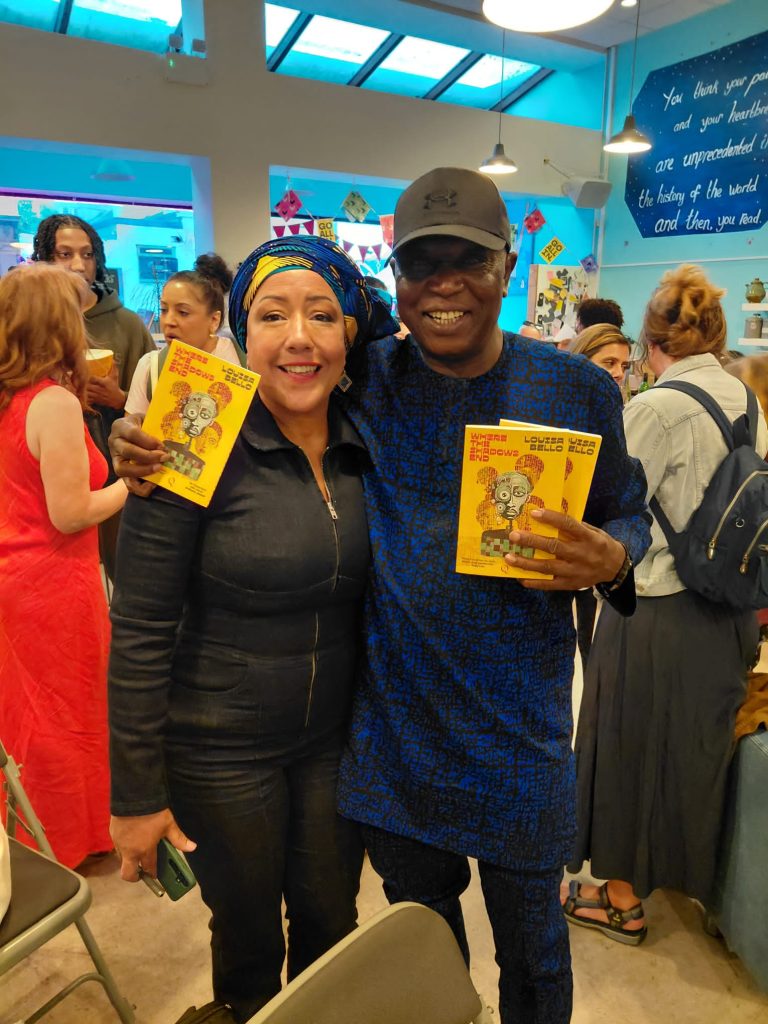
What has your experience teaching creative writing and leading workshops taught you about storytelling?
Oh, storytelling comes in many forms, and I love using as many forms as possible. Not all of us are wordsmiths but we can be brilliant storytellers nonetheless – have you ever been on a story trail with a child? They will conjure up the most complex worlds and inspired stories using their bodies and the world around them, their drawings and whatever words they have in their vocabularies! One of the saddest stories I’ve ever heard is just six words long: ‘Baby clothes for sale: never worn,’ not sure if it was Ernest Hemingway, but I’ve had such amazing sessions encouraging young people to create their own.
How do you reconcile your personal mantra of ‘Be Kind’ with a literary world that can often gravitate towards conflict and darkness?
We can be kind in everything we do. Especially in conflict and darkness. Being a kind reader, trying to listen with kindness, act with kindness. I’ve not much experience of the literary world but I think the gatekeepers could do with borrowing my mantra. Kindness isn’t sympathy and doesn’t have to be pathetic or weak; kindness just means remembering your story isn’t the only one in the world, all of us are connected in many ways and just remembering that in your interactions as you go through life could result in some beautiful outcomes. To me, it’s so obvious, but sadly, for many it isn’t, and that’s one of the reasons why we all struggle so much through life as we do.
The novel explores some difficult emotions. What was it like writing those scenes?
I have cried a lot during the course of writing this novel. It was sometimes a challenge not to get angry at the other characters, or the world, and that’s when line editing came in. Getting technical with my commas would pull me out enough to refocus but Sam’s pain could stay with me for a long time after.
What surprised you most about the process of writing and publishing your first novel?
Nothing surprised me as I didn’t ever really know what to expect. Actually, maybe how long the process from completed manuscript to publication is – a whole year! and, the level of marketing needed – that I’d have to cut my wrists for all to see just how the words flow through my blood. I have never needed to know much about my favourite authors – I couldn’t tell you any of this about Gabriel Garcia Marquez or Ben Okri, I don’t know much about them as people, I only know their stunning prose. I thought that was all readers needed – but in this day and age, readers seem to want to know what colour a writer’s knickers are, so, here we are – I’m not wearing any lol, I’m writing this in my pajamas!
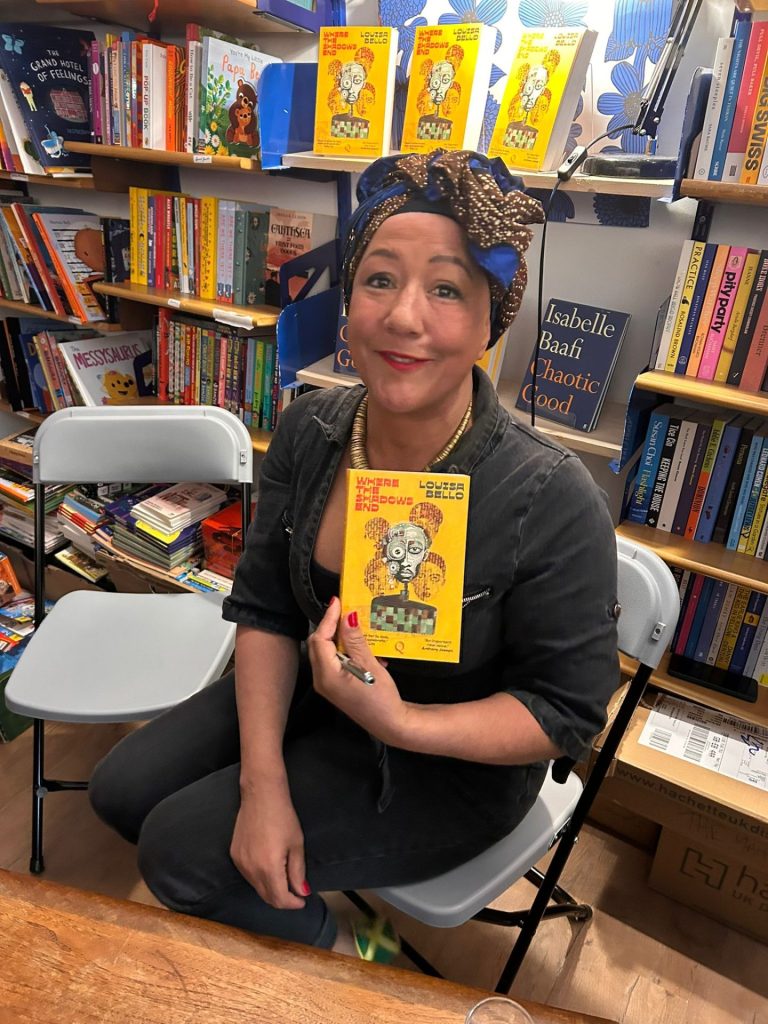
What is the best piece of writing advice you’ve ever received?
Don’t write intoxicated – you might think you sound like Ernest Hemingway but trust me, you’re just creating more work (and embarrassment) for yourself the next day!
What’s the most rewarding response you’ve received so far?
Every single response has been both terrifying and rewarding. I’m so grateful people are reading it and loving it, but it’s also scary that some people might not like it and I take everything personally – I am working on this with my therapist!
What’s next for Louisa Bello?
I’m so excited about the future – I’m hoping to write a prequel – the story of how Sam’s parents met in London in the 1970s against the backdrop of the Rock Against Racism movement. I’ve always been an anti-fascist activist and I think we need this novel now more than ever – to remind us of what we can overcome if we all unite, and how the healing power of music can be a conduit for societal change.
Follow Louise on Instagram @louisabelloauthor
Where the Shadows End can be purchased in all book stores including Barnes and Noble including the publisher:


