

“Searching for that middle space… some might call it a home”
Cake’s Essence Aikman on film, femininity and carving out identity with her bare hands
Peering intently into the first half of Cake, I couldn’t decide what I was watching. Was it a simmering kitchen-sink, all clenched jaws and balled-up fists, buzzing hotly with the unspoken? Or a bloody rampage of a splatter-punk story, waiting to scratch and claw when the pastel curtain fell? It wasn’t until the film’s final moments that I realised Cake is both, and more.
Manchester’s HOME Young Collective boasts an outstanding team of on-the-rise filmmakers, producing films that fine-tune the fresh narratives of youth with the help of state-of-the-art equipment and industry professional assistance. The collective’s striking balance of originality and quality empowers its community of young creatives, bound together by a passion for perfecting. It’s this very passion that tugs Essence Aikman’s lips up into a giddy smile as she sits opposite me in a bar, sipping on a soda and beaming at the thought of her directorial debut, in collaboration with HOME.
Tracing the fruitless attempts of a young woman to helplessly hold together a decaying friendship, Cake is a humbly gut-punching drama, iced neatly in pastels that Aikman delights in smearing across our screens. With a protagonist dissecting her relationship with femininity and identity, Aikman hopes that audiences will similarly “reflect on how we perceive female connection…our own rage and longing and ugly moments”. Essence focuses these thematic concerns on the central symbol of a destroyed cake, fuelled by “Rebecca Schott (writer of Cake) using our understandings of femininity and turning it into something gross”. And this instant repulsion is not to be underestimated; there’s an excitingly gross-out element to Cake, with the elasticity of female rage critiqued through the protagonist’s simultaneous subdued emotions and all-consuming fury.
“It’s like rage rooms” says Aikman, “we release all this anger, but then have to walk straight back into a society that got us so pent up in the first place”. Cake is essentially a collision of two ends of the feminine spectrum, both the silence and the screaming, compressed into a ticking time bomb of a short film. It’s in this duality that Cake cuts the deepest; humming with bloody rage and shrieking with quiet longing, baring teeth that both tear flesh and bite tongues. Hallmarks of the collective feminine experience anchor the film, from the exhausting burden of unpaid labour to the frustrating cyclical purgatory of release and repression. Aikman navigates this swollen nucleus of female identity with the ease of a true rising star, successfully mediating a satisfying symmetry between the two ends of the spectrum.
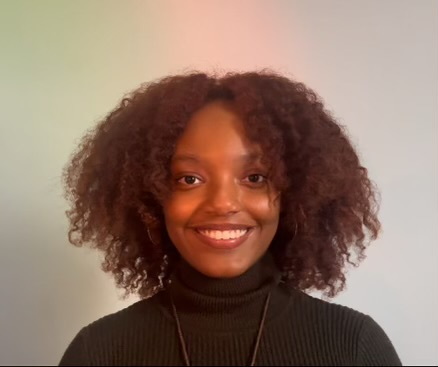
But finding middle ground is nothing new to Essence. Born in Bermuda before emigrating to the UK, Aikman uses filmmaking as a tool to balance and reconcile these dual identities; “searching for that middle space” she confesses “some people might call it a home”. It’s through her art – “and it’s all blood, sweat and tears, dude”, she tells me – that she can truly explore identity, and Cake shines with the intelligent touch of a director that strives not only to understand her characters, but to leave a piece of herself in them.
After a hit screening at HOME, Aikman looks to potential film screenings and festival circuits on the horizon, and confesses her excitement at stepping into an increasingly diversifying industry. As she cites Michaela Coel, Issa Rae and Ava DuVernay as undeniable examples of Black female artists finally given their flowers, I ask Essence if she worries about the prevailing dominance of the rich and male in our industry; to which, Aikman shrugs casually, “Nothing can stay stagnant forever”.
Cake will screen at the Sheffield Shorts Festival on June 18th.


