
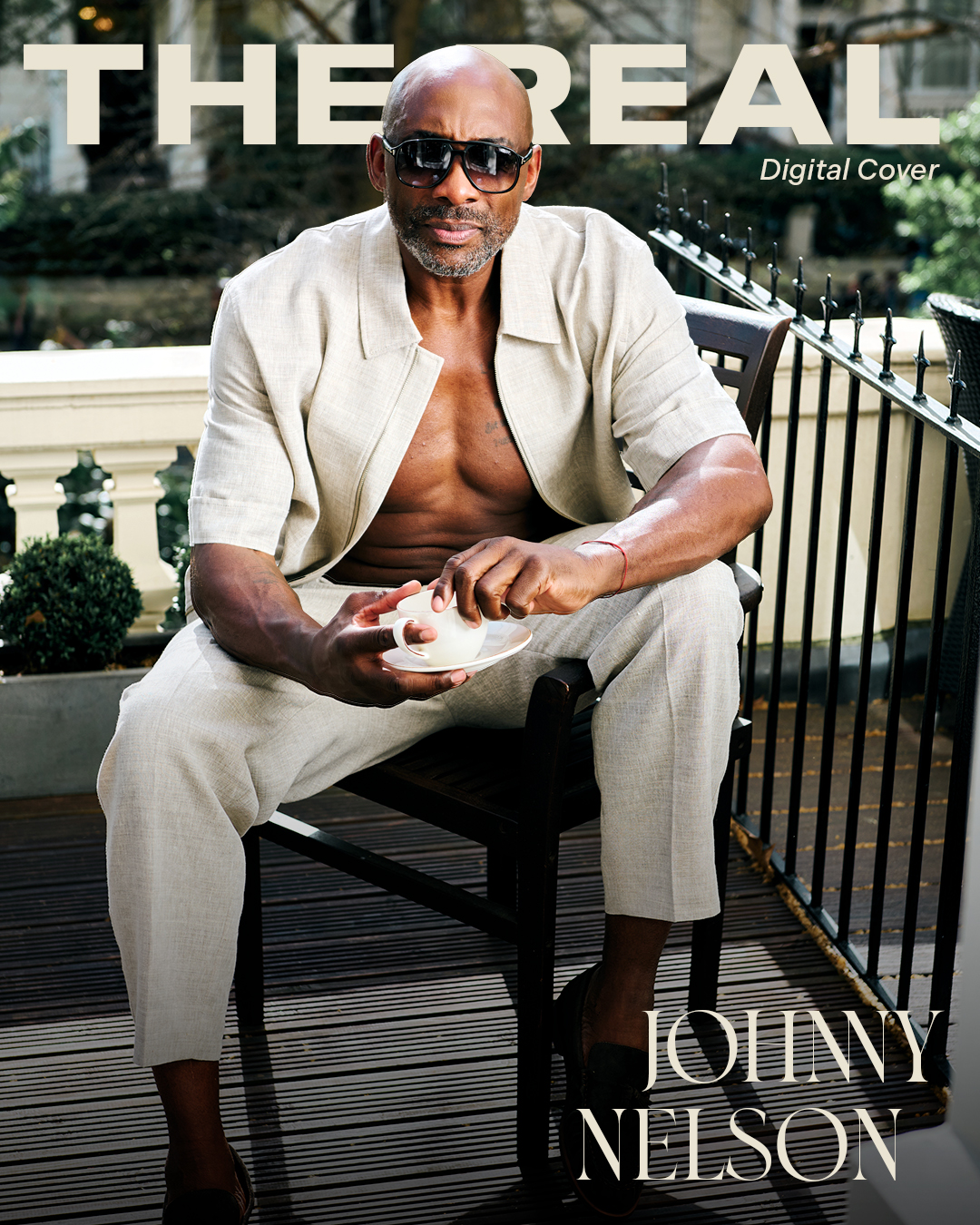
To generations of boxing fans, Johnny Nelson MBE will always be remembered as the relentless cruiserweight champion who defied expectations and carved out one of the most enduring careers in British boxing. But away from the bright lights, Nelson’s story is just as much about personal growth and finding purpose beyond sport as it is about titles and triumphs. Raised in Sheffield and shaped by the guidance of legendary trainer Brendan Ingle, Nelson’s path through boxing was never straightforward. His success was built on persistence rather than instant stardom – on learning how to overcome self-doubt, embrace pressure and develop the resilience needed to survive at the highest level. Those experiences, he says, continue to influence every part of his life long after retirement; from the routines he keeps to the way he approaches challenges outside the ring.
Today, Nelson is as familiar to audiences as a broadcaster and pundit as he once was as a fighter, bringing honesty, humour and hard-earned insight to boxing coverage. Yet despite remaining close to the sport, his priorities have evolved. Much of his focus now lies in inspiring younger athletes, speaking openly about confidence and mental discipline and working on projects designed to support vulnerable young people and create opportunities for the next generation. What emerges most clearly in this interview is not simply Nelson the champion, but Nelson the person. A thoughtful, driven character who is deeply aware of the lessons boxing taught him about responsibility, structure and self-belief. Decades after first stepping into a gym, he remains a figure defined, not just by what he achieved in the ring, but by the values he continues to carry beyond it.
You held the cruiserweight world title for over six years, what do you think was the key to that longevity?
It was professionalism, determination and desire. Not changing the same appetite, the hunger that I had when I didn’t have it, because the second your drive disappears, that’s when you start to become complacent. Then respecting the responsibilities of the task in hand. To become a world champion, even if no one else believed it, I believed that I was the best in the world so I had a responsibility to make sure I prepared like the best in the world would do, to expect success.
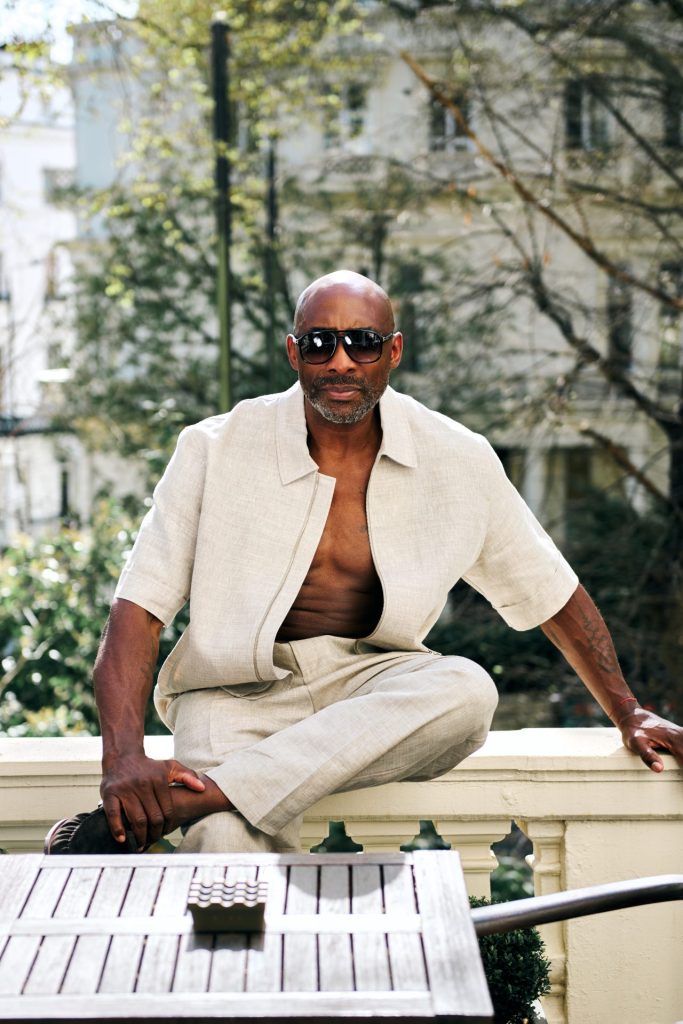
Shirt and trousers: Cos
Sunglasses: Tom Ford
Shoes: Walk London
What advice would you give to athletes struggling with confidence early in their careers?
You’ve got to think to yourself ‘why would you do it in the first place?’ You did it because you desired it, because you wanted it and because you were interested in it. Once you’ve accepted that, it’s now your responsibility. You put yourself in that position so therefore you’ve got to think to yourself, right I’m here now, it doesn’t matter what anyone else has said, it doesn’t matter how anyone else looks at my career, it doesn’t matter what anyone else thinks of how well I’m doing. If you can see the path to success, to see what must be done, it might not be the first attempt and it might not be the second. Success might come at the third, fourth or fifth try, but your time will come. Practice does make perfect, but you must become experienced in every aspect of the game. Both failure and success; you learn from each one. From success – you think, how have I handled it correctly? From the failure- why did I fail? What did I do, what should I do? How can I fix this? You are your own assessor. If you are constantly reaching out for others to believe in you, it doesn’t matter what front you put on, you are never, ever going to feel truly worthy of the position you’re in. Take responsibility and believe in yourself. You wouldn’t be doing it otherwise.
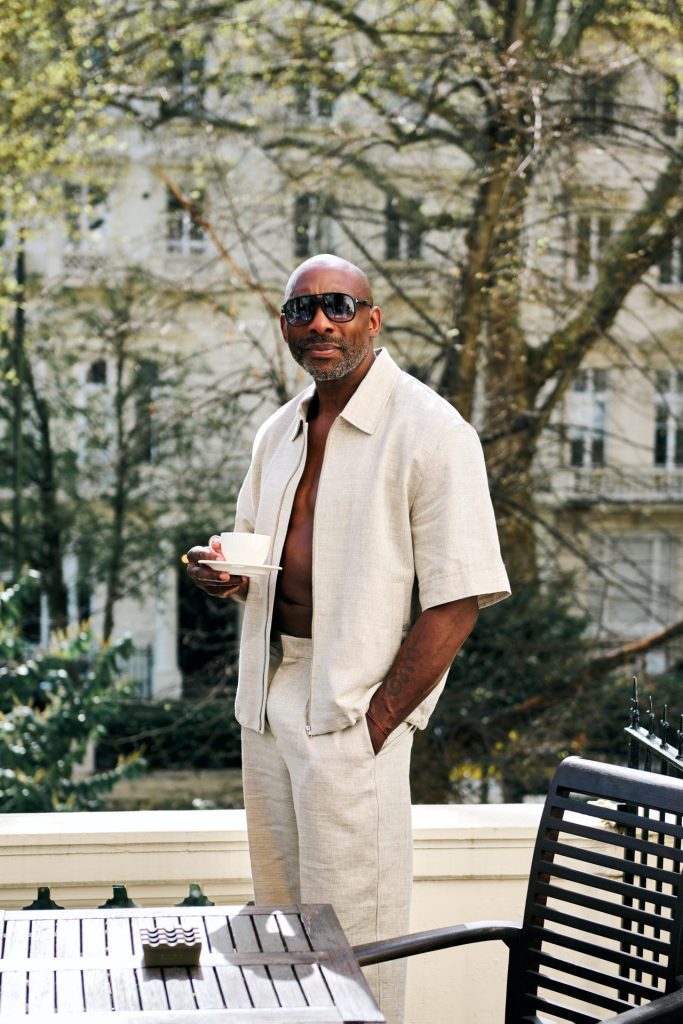
Shirt and trousers: Cos
Sunglasses: Tom Ford
What did a typical training camp look like for you during your peak years?
I was always in the gym ticking over so I was always gym-fit, which is important. Never get complacent, because when you win a fight, you might have a couple of days off after, but when you start to think like a novice you will perform like a novice. You’ve always got to stay on top of training and always be around that environment. I was always in the gym five days a week, hitting the bike, doing the footwork, doing something until it came to fight time. When it comes to a fight, that’s when you start to plan, you start working on a method of how to dethrone your opponent and you ask- is he strong? Is he fast? Has he got good footwork? Is he southpaw? Is he orthodox? That’s when you work on the techniques instead of spending your training camp trying to get down to weight and trying to get fit. Training camp should be about you preparing to dethrone your nemesis. You should live in the gym. I trained three times a day – I’d train in the morning at 3am, then at 7am until 9 am and I’d be back in the gym at about 4pm. That’s three times a day, five times a week and then I would have a little move around on a Saturday morning and have Sunday off. That’s twelve weeks of practice, focus and precision. It all depends on how much you want it. If you want it enough, you’ll get it. It’s always available for you.
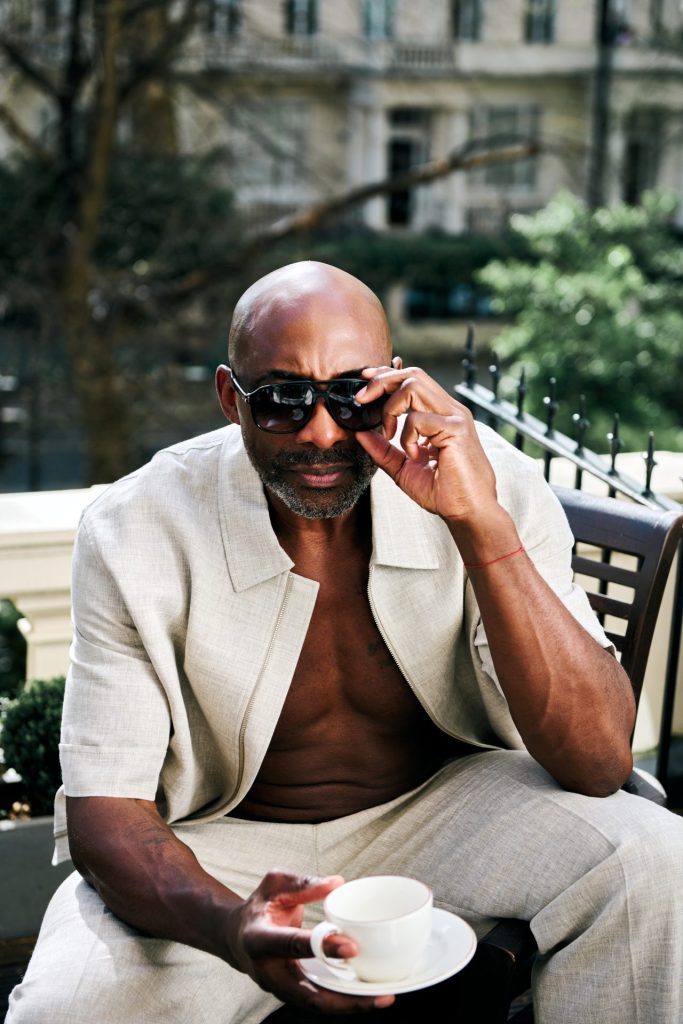
Shirt and trousers: Cos
Sunglasses: Tom Ford
How has boxing training changed compared to your era?
It’s more scientific and I think you get a lot of people going to university and they come out with some letters after their name and think they’ve invented the wheel. Boxing is one of those sports where the best place to be, to be comfortable and to have ring craftsmanship, is in the ring – sparring , moving around and understanding your body. Having that conversation and argument with the quiet side of your head when doubt is saying ‘can I do this?’ You need to win those arguments. Doing those power moves are great, but our sport is about more than that as well, so long as you’re fit and you can do the job, sparring is like walking, talking and moving around. You can do this daily so when you have that, you’ve worked on the basics. I’m not saying today is not as good as yesterday, but it takes more than someone with letters after their name to make you into the ultimate fighting machine because people that made history in our sport didn’t have access to what they have today. It’s more scientific now, whereas I think the fighter should understand science is only twenty percent of it and the rest of it is understanding the game.
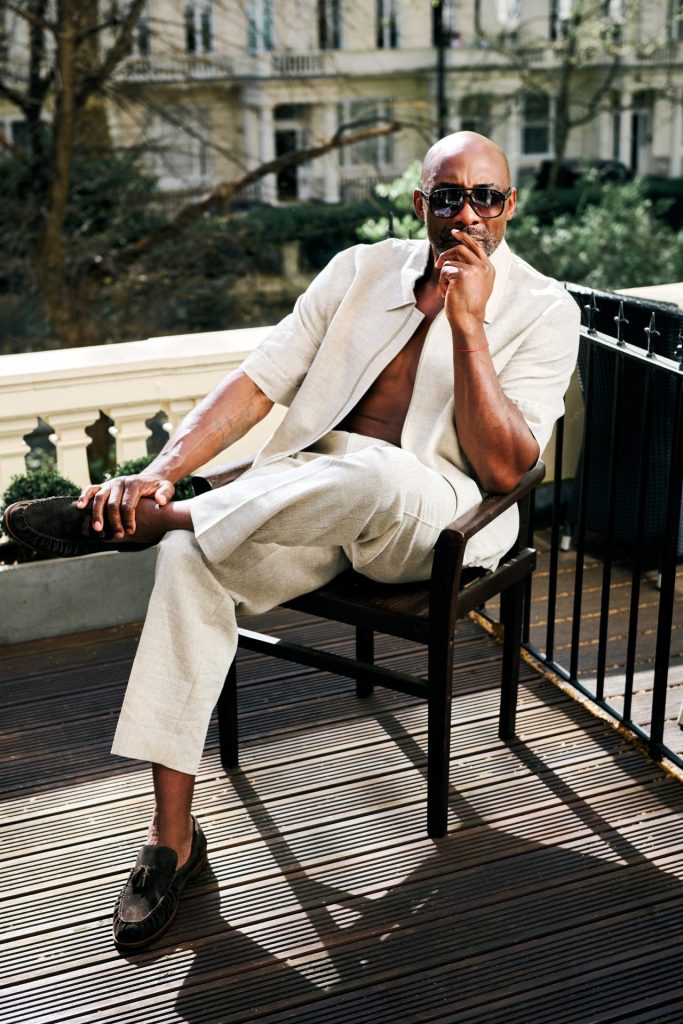
Shirt and trousers: Cos
Sunglasses: Tom Ford
Shoes: Walk London
You’ve become a key voice in boxing coverage, what do you enjoy most about your role in broadcasting today?
I enjoy the excitement, the anticipation and the unexpected. I enjoy the emotional investment from fighters and their honesty. I enjoy the pantomime, the boos and the cheers. I think the British fans are the best, if I’m honest with you and I think most fighters around the world love the passion the British fans have. I love how they are not shy in coming forward and expressing who they support and how much they support them. I love broadcasting in that respect because I can just be myself and it doesn’t matter if you agree or disagree, it’s an opinion and it’s fun.
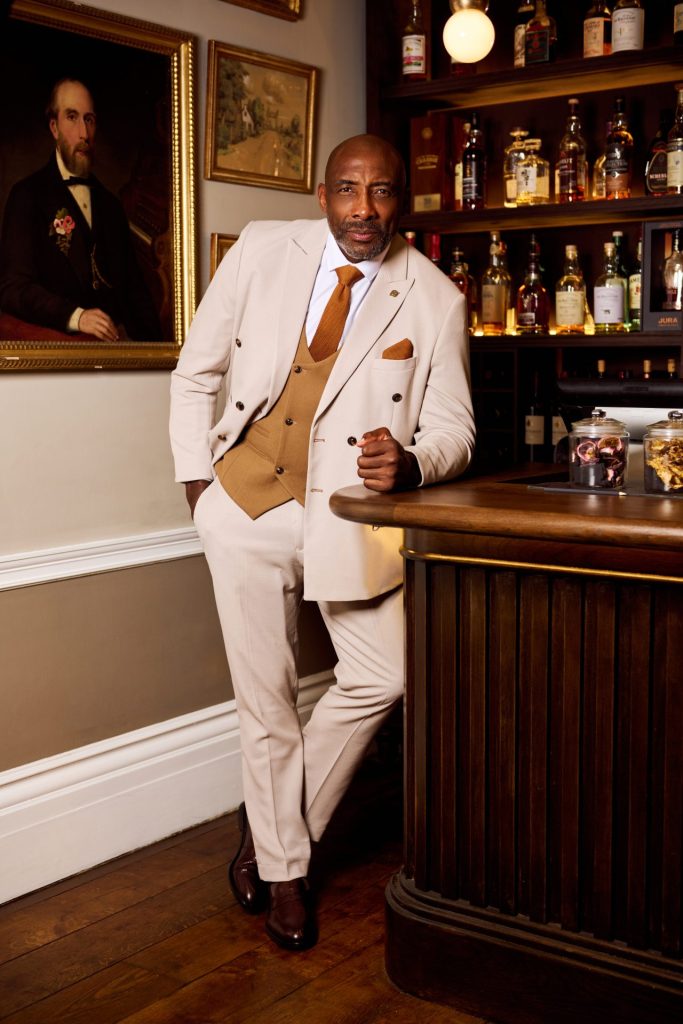
Suit: Marc Darcy
Shoes: Walk London
Do you miss the adrenaline of fighting or has media work filled that gap?
I do miss the adrenaline of fighting. I do miss that thing to look forward to on a particular day. Nothing compares to it, nothing else matters, nothing is more important than it. The one thing between boxing and the media is, in boxing, you can punch your way out of [ a situation]. There is the adrenaline from working in the media, especially when it’s live, but because there are no second chances in live television, you’ve got to stick it out. So, which one is more brutal? I’d say the media is more brutal because you can’t punch your way out of it.
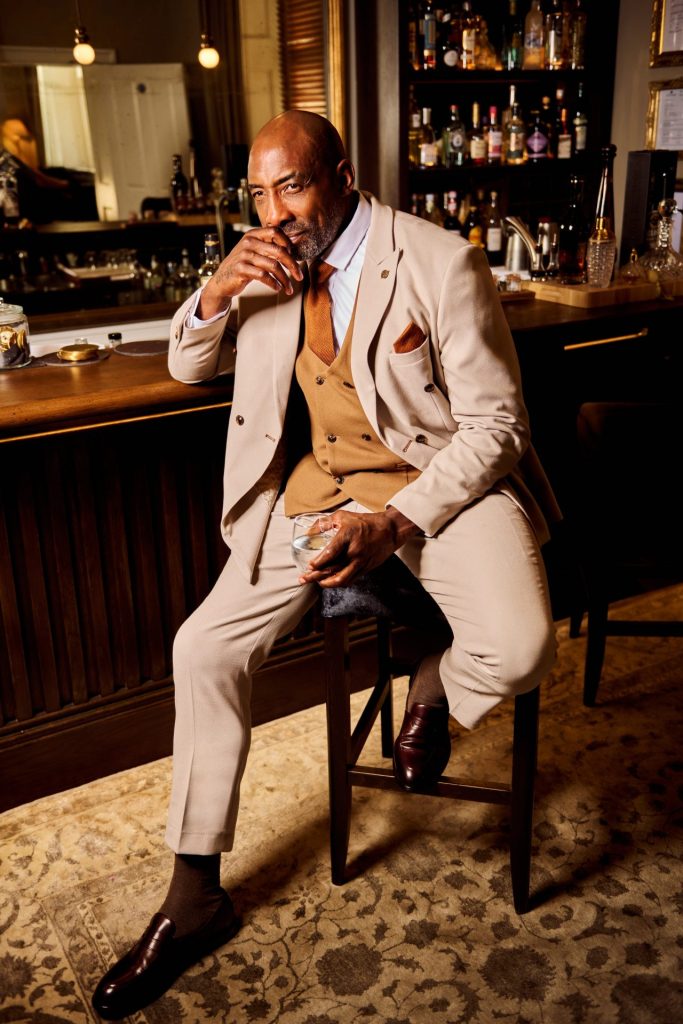
Suit: Marc Darcy
Shoes: Walk London
You’re still ringside for the biggest moments in boxing. How does that role compare emotionally to being inside the ropes?
It’s completely different to being inside the ropes. Outside you know you can sit back, have your popcorn and watch. Inside the ring it’s the only place you can get legally killed. That’s one thing every fighter knows. It’s the only place you can get embarrassed, ridiculed, shamed or hurt and that’s what you’re there for. You’re the entertainment and so there is the adrenaline and the rush. The fear and the excitement are two different kinds if you’re a spectator versus being the competitor. If you’re the competitor it’s serious, if you’re a spectator, you think it’s happening to someone else. So, when I see fighters in the ring I’m like ‘wow, what is he going through?’ I remember when Anthony Joshua walked into the ring against Vladimir Klitschko at Wembley and he was walking down and the whole crowd were cheering. It was entertainment for us, but for him, he had to walk through 90,000 people, going to what could be an absolute slaughter or the best night of [his] life. That’s the difference between being a spectator and a competitor.
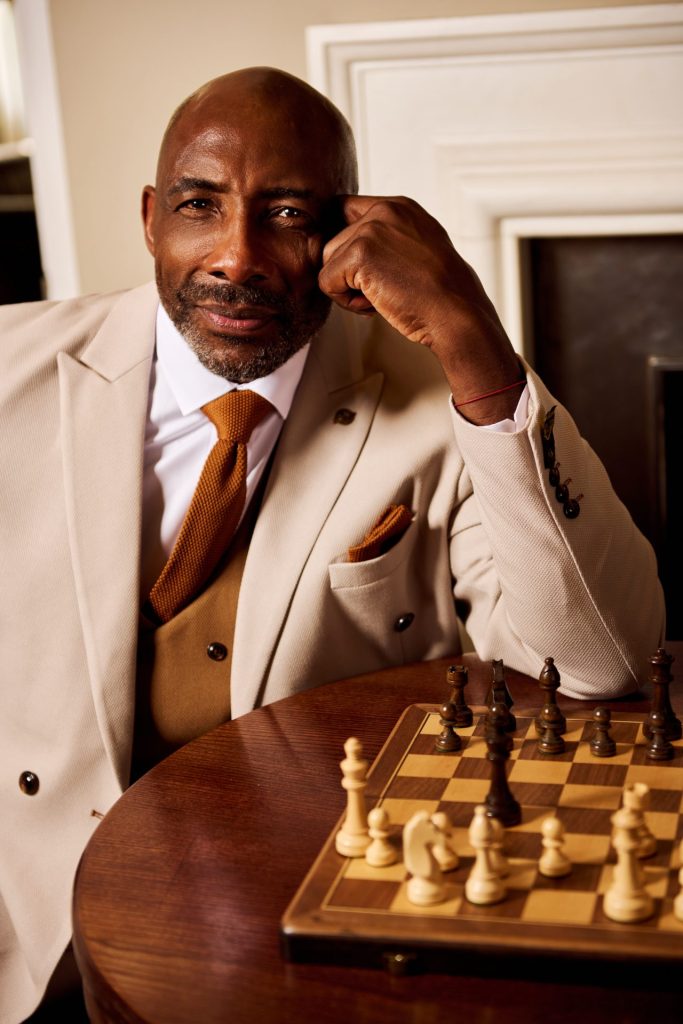
Suit: Marc Darcy
How do you prepare for a big fight now, compared to when you were stepping into the ring yourself?
I’m excited, I get dressed up, I read my notes – I’m a fan as well as a pundit. Being in the seats I get so excited, especially if you know the fighters and the history behind the fight, the drama and the love or hate between them. That’s even better and that’s the stuff you see behind the scenes.
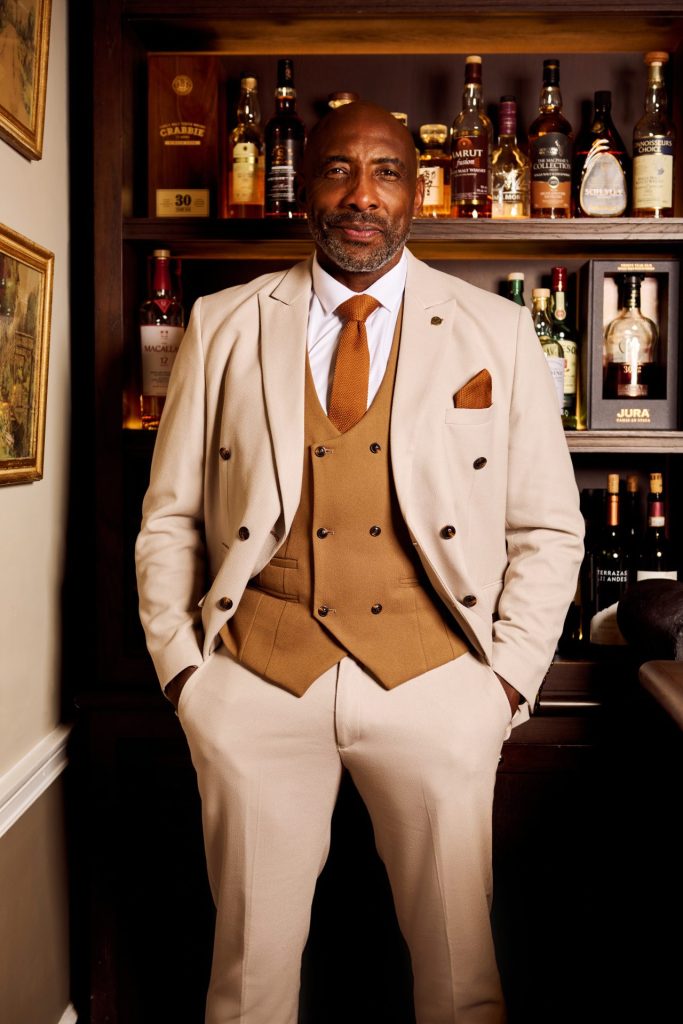
Suit: Marc Darcy
Do you ever find it difficult to critique fighters, knowing first-hand what they’re going through?
No, I don’t, I think straight talk is important, so you know where you are. Some fighters and sportsmen take it to heart but it’s the wrong game to be in [if you do.] In fact, in any sport you’re going to get criticised from people who don’t even know your sport, you’re going to get it from people who have never done it before and if you are influenced by them, then you’re the fool, not them as they just have an opinion. That’s the difference between a civilian and an active sportsperson. Regarding being a former athlete, you are speaking from experience so when you’re criticising someone, you’re not criticising them to be mean, you’re criticising them so they get better and become aware of what they are doing. That’s why I do it. It’s never personal and most sportspeople take it personally, but it’s never personal. I criticise them if I’ve got to, because I want the best for them, and realistically how will you improve and know where you are unless someone is going to tell you the truth? If I don’t feel anyone is around he or she to tell them the truth, then my words are coming out. If they want to listen, they will.They will appreciate it in time to come.
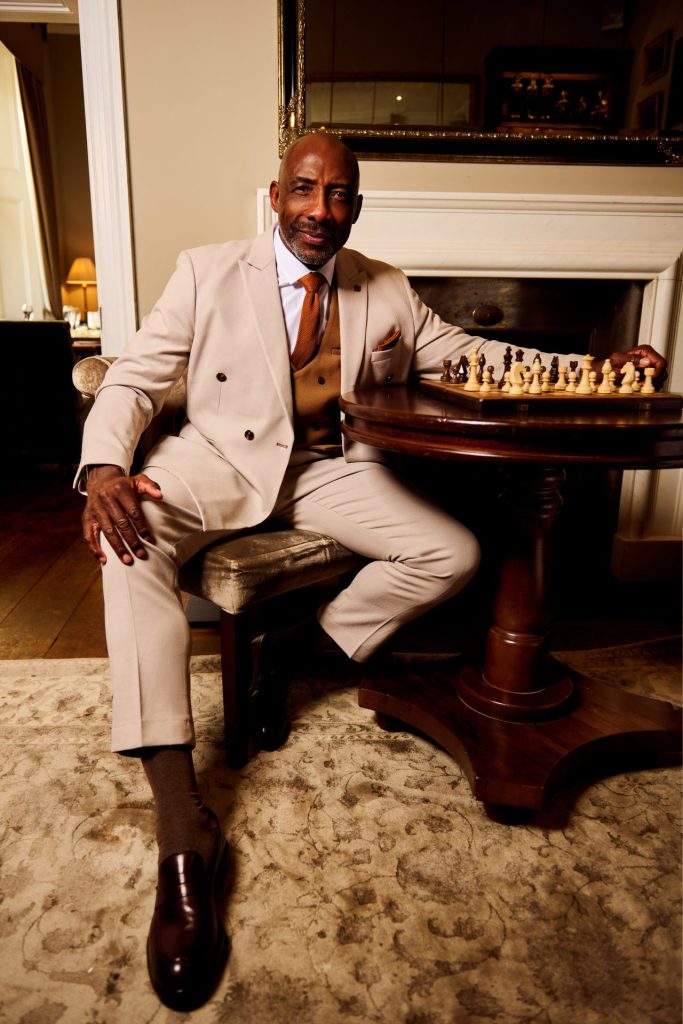
Suit: Marc Darcy
Shoes: Walk London
What’s been your most memorable moment working as a pundit?
There are two. Anthony Joshua against Vladimir Klitschko at Wembley. [During the fight], I thought to myself, ‘I love my job.’ I had a great time, and I was just in awe – the hair I had left was standing on the back of my neck. I understood what was at stake and how much of a gamble it was. I understood the journey of Anthony Joshua, and I knew Vladimir Klitschko as I used to train with him, so it was like being involved in a live theatre and I knew it was going to be big. The other was when Floyd Mayweather boxed Conor McGregor – that was just funny.
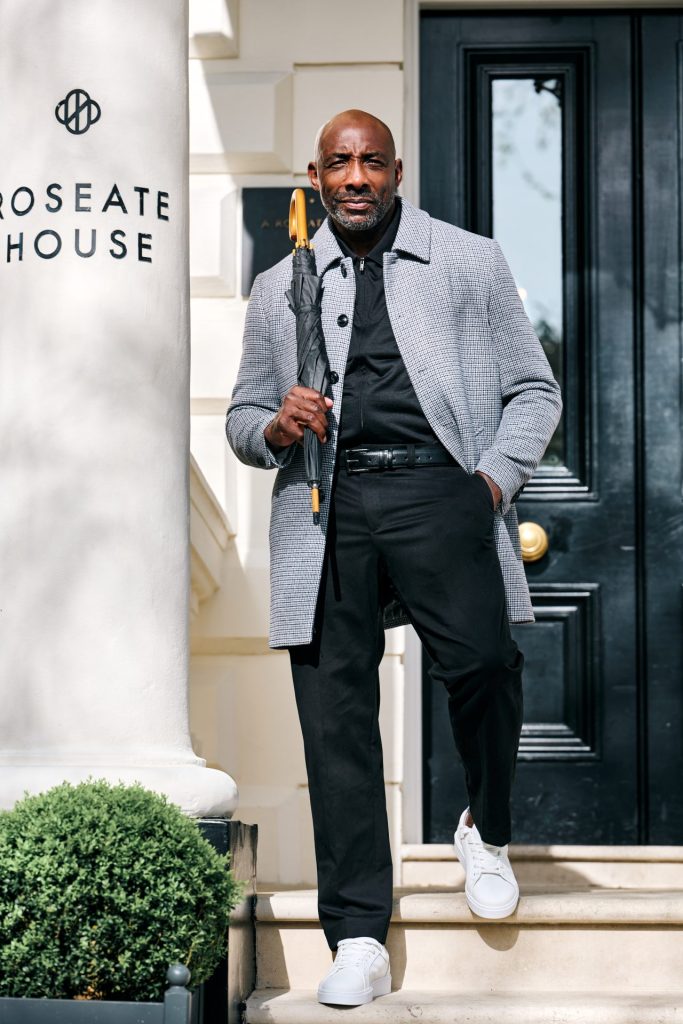
Coat: House of Cavani
Jumper: Cos
Trousers: Mango
Trainers: Cleens
How do you feel about the rise of crossover boxing and influencer fights?
Influencers understand the business of our sport, so they know how to get the fans to listen and to want to get involved. Unfortunately, boxing influencers have leapfrogged a lot of the traditional fighters because they’ve not invested in themselves in terms of promotion in the way that the influencers have. When it comes to ability; it’s night and day. Boxers do need to learn from influencers about promoting themselves instead of leaving it to their promoter because historically in our sport that’s what you do, you depend on your promoter and manager to do the job and then you ask years later, ‘well how come he had a better gig than I did?’ If you’re a fighter and you have a fan base that you’ve created, every promoter should want to put you on. If you’re selling 5,000 or 10,000 tickets, every promoter will be looking for you. But if you’re not a fighter who sells tickets then you’ve put the power in the promoter’s hands. So, I rate the influencers for their business acumen in our sport.
What was the biggest adjustment you had to make after stepping away from competition?
The biggest adjustment I had to make after stepping away from competition was not having something to focus on and for five years it was pretty hard. For most sportspeople it’s the same, you feel as though someone has stolen a day out of the week. You don’t know who to blame, but you know something is missing. You have to create little [forms] of discipline for yourself personally and stick to them because if you don’t, you will go off the rails.
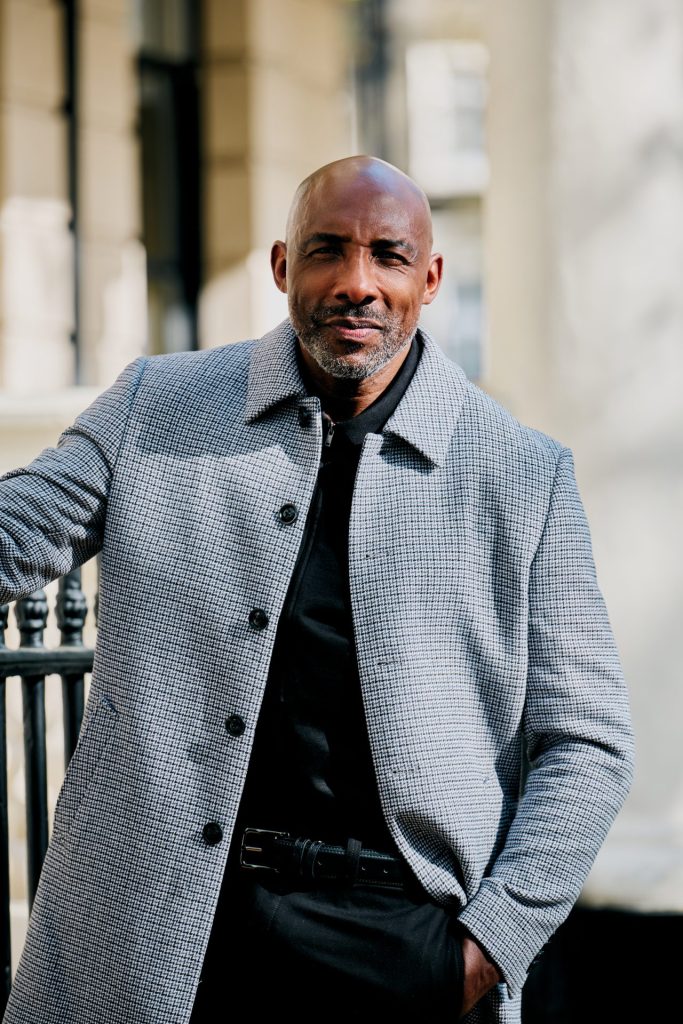
Coat: House of Cavani
Jumper: Cos
Trousers: Mango
Are there any routines or habits from your boxing days that you still stick to?
I stick to the discipline of what I eat and it’s not easy. It’s not as intense. I fast for 36 hours, I just do it once a week, not just for the physical side of it but the mental side of it, to know that I can, that I’ve still got that discipline in me. When you’re used to having a completely disciplined life and then there’s none, you go completely off the rails so I fast for me, not for anyone else, not for a tap on the back, not [for someone to] say, ‘you’ve done brilliantly,’ but just for me. For that mental discipline and stability because I know my life has been about having some kind of structure, so it’s about creating structure that benefits me.
What motivates you now that you’re no longer chasing titles?
What motivates me now is to inspire and educate other fighters who were like me, ones who were nervous fighters. Just because you’re a nervous athlete doesn’t mean you can’t do it, it just means you’ve misunderstood the difference between nerves and fear, so you’ve got to go through experiences to get wisdom. That’s what I’ve done and so I want to pass that on to other athletes to inspire them to see what’s there because to those who are listening, it’s the flip of a coin. You think it’s a million miles away, but it isn’t, it’s a flip of a coin – I was that guy.
Are there any current projects or ventures you’re particularly passionate about?
Right now, I’m close to opening a children’s home in Sheffield, it’s called Cynthia Care, named after my mum. It’s going to be a residential home for young individuals from the age of 14 to 18. I’m doing this because of what Brendan Ingle did with me and all the people in the gym and all those around me, he taught them and inspired them in such an unorthodox way. We’ve secured the house, started decorating, and I’ve got to beg, borrow and steal like Brendan did to set it up because currently I’m funding it all myself. A local company donated beds and mattresses, but we’re looking for kitchen appliances and a sofa so that they’ve got a cool ‘den’ to relax in. That’s what I’m working on so if anyone would like to donate or can help, we are not a charity, but would benefit from people’s support where they can. It means a lot to me and I’m very passionate about providing children with a safe space. I didn’t get an MBE for nothing – I want to do something with it.
Follow Johnny on Instagram @johnnynelson
A special thank you to Roseate House London, our shoot location @roseatehouselondon
Team credits:
Photographer: Jacquetta Clark @jacquetta.studio
Lighting Technician: Harry Chapman @Vi_olo
Fashion Stylist/ Editor in Chief: Charmaine McKoy @charmainemckoystyle
Interview/Deputy Editor: Sean Mckoy @sean.mck
Grooming: Louise Lerego @louiselerego
Videographer: Nana Opoku-Agyeman @official_solarflare
Videographer: Joe Mascari @jm_videographer
PR: Gemma Oakes @gemoakes @ampersand.agency


